Known in English as Vietnamese luffa, or sponge gourd, and in Vietnamese as Mướp Hương, this humble fruit is a staple in the heart of Vietnam’s culinary landscape.
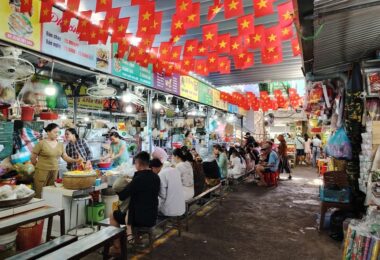
If you wander through the bustling aisles of Dong Ba Market in Hue, you’ll see these long, green gourds in vegetable shops, a symbol of the rustic food and healthy lifestyle that locals often cook for daily meals. It is just one of the many incredible local foods in Hue City that define the flavor of this Ancient Capital.
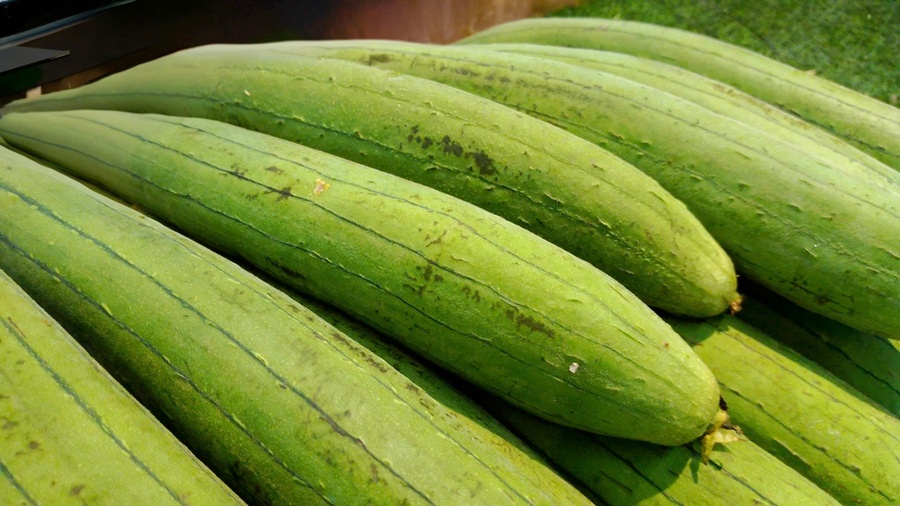
But in Vietnam, a sponge gourd is more than just an ingredient; it is a “cooling” gift from nature, deeply woven into the philosophy of balance and the secret beauty rituals of the past.
1. The Philosophy of Balance: A Gentle Guide for Food Lovers
In Vietnamese culinary culture, we believe in the harmony of Yin and Yang (Âm – Dương). The sponge gourd is a prime example of a “Yin” (cooling) food, perfect for detoxifying the body after working hard or during the humid summers of Central Vietnam.
However, a local expert will tell you that balance is key. Because of its cooling nature, we rarely pair it with other “cold” ingredients like White Radish or Spinach. Doing so might overstimulate your digestion. Instead, we balance it with “Yang” ingredients like ginger, pepper, or shrimp to create a dish that is not only delicious but also harmonious for your stomach.
2. Five Great Uses of Sponge Gourd: From Table to Tradition
While it nourishes the body, the sponge gourd also carries stories of family care and ancient wisdom.
2.1. The Nourishing Comfort Food
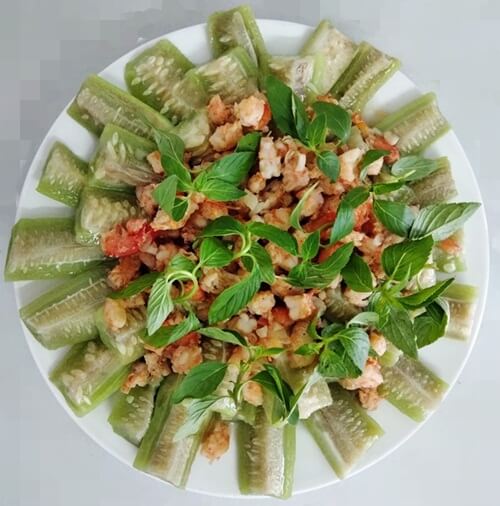
For generations, Canh Mướp (Sponge Gourd Soup) cooked with shrimp or pig’s hoof has been the ultimate comfort food for mothers. Rich in vitamins A, B, and C, it is traditionally served to boost milk production and restore energy. When you taste a spoonful of this sweet, fragrant broth, you are tasting the care that Vietnamese families have for one another.
2.2. A Versatile Star in Home Cooking
The beauty of the luffa lies in its simplicity. Whether it is steamed with garlic, stir-fried with beef, or simmered in a light soup, it absorbs the flavors of the accompanying ingredients while maintaining its tender, refreshing crunch. It is the definition of “home cooking” in Hue.
2.3. The Summer “Cooler”
Traveling through Vietnam in the heat can be exhausting. Locals turn to sponge gourd as a natural remedy to prevent dehydration and soothe the digestive system. A simple bowl of boiled luffa can work wonders, acting as a gentle detox that keeps you refreshed for your next adventure.
2.4. Food as Medicine
We believe that a good meal is the first step to good health. Beyond its fiber and minerals, the sponge gourd is used in folk medicine to ease menstrual discomfort and calm inflammation. It’s a testament to how Vietnamese people live in harmony with their environment, finding healing in their gardens.
2.5. The Secret of the Ancient Imperial City: A Beauty Legend
Imagine the inner courts of the Hue Imperial City a century ago. Long before modern skincare, the noblewomen of the Nguyen Dynasty held a secret to their radiant, porcelain skin. They didn’t look to expensive potions, but to the “Heavenly Water” of the sponge gourd.
As the sun set over the Perfume River, they would harvest the liquid from the gourd’s trunk, a process requiring patience and a deep connection to nature. This clear, cool sap was used to wash their faces, smoothing wrinkles and calming the skin after a long day in the tropical sun. Even the dried fibers (loofah) were not wasted; they became natural exfoliators, keeping the skin of the Cố Đô (Ancient Capital) women soft and vibrant.
2.6. The Ultimate Eco-Friendly Tool: A Zero-Waste Legacy
The versatility of the loofah doesn’t stop at beauty. Long before “plastic-free” became a global trend, the Vietnamese people had already mastered a zero-waste lifestyle using the dried fibers of the sponge gourd.
In a traditional kitchen, you will often find a loofah sponge hanging near the sink. These natural fibers are tough enough to scrub pots and pans clean, yet gentle enough not to scratch delicate surfaces. It is the perfect local solution: biodegradable, sustainable, and provided entirely by nature.
Today, when you see a loofah sponge in a local market like Tay Loc or Dong Ba, you are looking at a timeless treasure that serves both the kitchen and the vanity, proving that the best innovations are often the ones grown in our own backyards.
3. Discover the “Flavor of Hue” with Our Local Experts
At Hue Flavor, we believe that the best way to understand a culture is through its local markets and hidden stories. While the sponge gourd (Mướp Hương) may not always be the star of every meal, it is a fascinating detail of daily life that we love to share with our guests.
During our Hue Street Food Tour, as we wander through the vibrant aisles of Dong Ba Market, our guides can help you spot these fragrant gourds at the vegetable stalls. If you’re curious, we’ll invite you to see and feel the texture of both the fresh fruit and the rustic dried loofah sponges (optional). It is these small, authentic “encounters” with local ingredients that open a window into the soul of Vietnamese traditions. As this is a seasonal fruit, our guides are always happy to point it out whenever it’s in harvest and available, ensuring you don’t miss this unique local touch.